Most pet owners judge a veterinary clinic through the lens of everyday experience: how long they have to wait, whether the diagnosis is accurate and how well the veterinarian interacts with their animal. From the perspective of the clinical team, the priorities are surprisingly similar. The equipment available in the consulting room and operating theatre has a direct impact on how smoothly the working day runs.
A digital X-ray system, a high-quality ultrasound machine or efficient patient management software are not simply investments in the clinic’s image. They are practical tools that speed up examinations, keep medical records organised and help reduce the workload placed on veterinary staff.
So which technologies have become part of the modern veterinary standard, and how do they improve everyday clinical practice?
What Does Digital Diagnostic Imaging and Veterinary Cardiology Include?
When a patient arrives at the clinic in poor condition, rapid identification of the problem can have a major impact on the chances of successful treatment. Traditional X-ray film and processing systems required considerably more time. Producing an image took longer, and an exposure error could mean repeating the radiograph.
Digital imaging provides diagnostic images much faster, often within seconds, allowing the clinician to assess the case without unnecessary delay.
For this reason, modern veterinary practices may benefit from investing in:
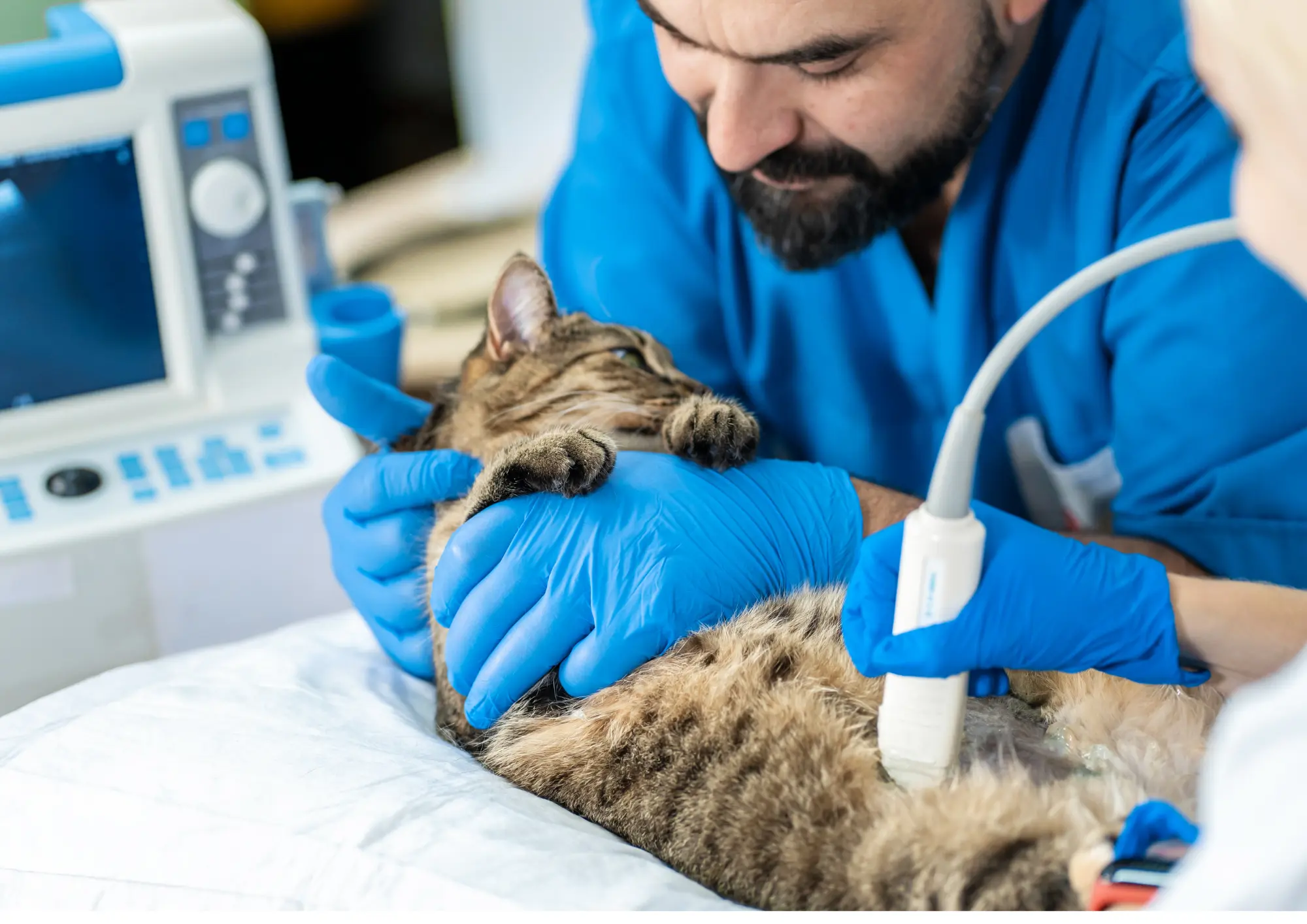
- Digital X-ray systems (DR or CR) and ultrasound scanners – these allow detailed assessment of bones and internal organs. Appropriate patient preparation for an ultrasound examination and correct positioning for veterinary radiography can make the entire procedure faster and more efficient. The examination can be completed without keeping a stressed dog or cat on the examination table for longer than necessary.
- Veterinary cardiology and echocardiography – matrix-array transducers and colour Doppler technology support detailed assessment of cardiac anatomy and blood flow through the heart and vessels.
- Point-of-Care Testing (POCT) analysers – allow blood counts, biochemistry panels or blood gas analysis to be performed in-house within minutes. This can give the veterinarian access to important diagnostic information during the same visit without waiting for results from an external laboratory.
What Equipment Is Essential for Veterinary Surgery, Anaesthesia and Dentistry?
Safety in the operating theatre depends on several factors, including hygiene, convenient access to the surgical field and continuous monitoring of the patient’s vital parameters during anaesthesia.
To improve safety during and after procedures, veterinary clinics may consider:
- Inhalation anaesthesia machines – enable precise administration of isoflurane or sevoflurane, helping maintain stable anaesthesia throughout more demanding procedures.
- Veterinary patient monitors – allow continuous monitoring of ECG, blood oxygen saturation (SpO2), non-invasive blood pressure (NIBP) and end-tidal carbon dioxide (EtCO2).
- Diathermy and electrosurgery systems – enable tissue cutting and coagulation of blood vessels during surgery. This can shorten operating time, reduce bleeding and support smoother postoperative recovery.
- Veterinary dentistry – dental units combined with digital dental radiography make it easier to perform procedures such as scaling, polishing and tooth preparation, as well as assess tooth roots and surrounding bone with greater precision and efficiency.
Which VetSupreme Procedure Accessories and Positioners Are Worth Investing In?
Even an advanced diagnostic system cannot produce a high-quality image if the patient is moving. Appropriate veterinary positioning and diagnostic accessories are therefore equally important, helping stabilise the animal and making examinations easier for the clinical team.
At VetSupreme, we design veterinary equipment around real situations encountered in everyday practice. Our solutions help position patients correctly, reduce the need for manual restraint and make procedures faster and more predictable.
Our veterinary equipment range includes:
- Veterinary mattresses for echocardiography examinations with specially contoured openings providing convenient access for the ultrasound transducer.
- Veterinary procedure mattresses, including custom-made solutions manufactured from materials that are easy to clean and disinfect between patients.
- Portable veterinary stretchers, designed to make transporting large, injured or unconscious patients safer and more convenient.
- Diagnostic and dental veterinary positioners, ranging from S/M/L positioning sets to specialist positioners for foals.
- X-ray and CT accessories for precise diagnostic imaging, including veterinary hip joint distractors and 25 mm radiographic reference balls.
- Veterinary dental drip trays, which help maintain a clean and organised working area during dental procedures.
Comparison of Veterinary Clinic Equipment Categories
| Category | Technology and equipment | Main clinical benefit | Impact on clinic workflow |
|---|---|---|---|
| Diagnostic imaging | Digital radiography (DR/CR), Doppler ultrasound, POCT analysers | Rapid results and accurate patient assessment | Shorter diagnostic process and faster treatment decisions |
| Anaesthesia and surgery | Inhalation anaesthesia, EtCO2 capnography, diathermy | Improved anaesthetic monitoring and bleeding control | More efficient procedures and improved perioperative safety |
| Patient positioning | VetSupreme positioners, hip distractors, echocardiography mattresses | Stable positioning and reduced motion artefacts | Fewer repeat radiographs and less stress for the patient |
How Do Digitalisation, Telemedicine and Workflow Management Affect a Veterinary Clinic?
Switching to digital practice management can significantly streamline the work of the entire veterinary team. When patient histories and diagnostic results are stored within one system, it becomes easier to avoid mistakes and information gaps during shift changes.
Routine administrative tasks can be automated, giving reception staff and clinicians more time to focus on patients and communicate with pet owners.
Useful technologies include:
- Practice Management Software (PMS) – can automate vaccination reminders by SMS, store patient medical histories and simplify appointment billing and administration.
- Telemedicine and DICOM/PACS systems – facilitate secure sharing of radiographic images and diagnostic reports. This makes it easier to consult difficult cases with a radiologist or other specialist, even when they are based elsewhere in the country.
Equipment Is Only Part of the Equation – Why Team Development Matters
Even the best X-ray or ultrasound system cannot work effectively on its own. Equipment delivers real value and improves clinical workflows only when the team knows how to use its full capabilities.
Technology investment should therefore be combined with regular staff training. Workshops on new equipment, modern suturing techniques and emergency procedures help veterinarians and veterinary technicians work with greater confidence.
As a result, equipment is used to its full potential, procedures run more smoothly and patient safety can be improved.
It is also worth remembering that well-planned ergonomics in veterinary medicine can reduce physical strain on staff and help minimise musculoskeletal overload during long examinations and procedures.
Choose Proven Solutions for Your Veterinary Practice
Investing in modern veterinary equipment can deliver benefits far beyond day-to-day convenience. Efficient diagnostic and positioning solutions can improve clinical workflow, support patient safety and demonstrate to pet owners that their animals are being treated in a professional environment equipped to meet modern standards of veterinary care.
Are you planning to upgrade your practice, looking for comfortable veterinary X-ray positioners or searching for durable procedure mattresses?
Explore VetSupreme.shop and discover equipment designed to make everyday clinical work easier for your team.
Frequently Asked Questions (FAQ)
Why Is It Worth Using Professional Veterinary Positioners During X-ray and Ultrasound Examinations?
VetSupreme veterinary positioners help stabilise the animal safely in the correct examination position. During radiography, this reduces patient movement and the risk of motion blur, while during ultrasound examinations it provides stable access for the transducer.
The result is a more efficient examination, less need for manual restraint and a less stressful experience for the patient.
What Is the Difference Between Digital Radiography (DR) and Traditional X-ray Imaging in Veterinary Medicine?
Digital radiography (DR) displays the radiographic image on a monitor within seconds of exposure. Unlike traditional film-based radiography, there is no need to develop X-ray film.
This shortens the imaging workflow, eliminates film-processing costs and allows images to be stored digitally, transferred to a PACS system or shared electronically for consultation.